Emergency Placement

He came to me early in the morning. I usually sleep in on the weekend, but the needs of little ones have no sense of time. "They think he's about two or three," the social worker had said. "I'm on my way to the detention center now to pick him up."

I was still in my pajamas when they arrived. She carried him to the door wrapped in a blanket. "We don't know his name," she said. "He's in desperate need of a diaper change." She handed me a small package of diapers and a bottle. "This is all he has."

I took him and she left, promising to call later if she could get any information out of his mother, who was drying out in a holding cell. I'll call him Little Buddy for now, I thought. When I laid him on my bed and unwrapped the blanket to change him, I found his clothes were soaked with urine, and I was grateful, not for the first time, for the multiple totes full of every size and season of baby clothes from newborn to 24 months that we kept on hand for occasions just like this.

He cried, trembling from cold and shock, as I cleaned him up. His poor bottom was red and raw from diaper rash. I spoke softly, calmly, but his eyes were wild. I carefully dressed him in dry clothes, wrapped him back in his blanket, and sat with him on the couch. He leaned into me, desperate. Clinging. "It's going to be okay, Little Buddy," I said, over and over. "You're safe."

By the end of the day, we had learned his name and age, but knew nothing of what he'd been through or what would make him happy. What foods he liked. What his bedtime routine was. He only ate a few bites for dinner and tolerated standing in the tub but refused to sit down in the water. We set up the portable crib and I held him and rocked him while he drank a bottle of milk. I knew he was exhausted. I sang him a song. I hoped as long as he had his blanket, he would fall asleep in the crib.

He screamed when I laid him down. Louder when I shut the door. It's normal for a child his age to fuss at first, I thought. I'll let him cry for a couple minutes. The screaming quickly escalated, and I went back in the room to find he had thrown up in his distress. All over his pajamas. All over his blanket. I shouldn't have left him alone. I peeled the wet pajamas off while Andy changed the sheets, but my Little Buddy wouldn't give up his blanket. I wiped the vomit off as best I could and figured I would wash it in the morning. It reeked of puke, but I wasn't going to take away his one and only possession. His only connection to home.

Little Buddy stayed up until everyone else in the house was in bed except me. He could barely keep his eyes open. I knew I had to try to lay him down again, because he certainly couldn't sleep in bed with me. Co-sleeping is not allowed in foster care, for obvious reasons. I sang him another song and gently put him in the crib, slipping out of the room as quickly and quietly as I could. He screamed. Not the kind of scream that means a child is upset or trying to get his way. The kind that means a child is out of his head with desperation and fear. After raising a dozen or so babies, I can tell the difference, and I knew there was no point in trying to wait him out. I picked him up and kissed his cheeks, which were soaked from crying. "It's going to be okay, Little Buddy. You're safe."

We found ourselves once again cuddled on the couch. The house was quiet and dark. I knew it was going to be a long night, but I had done this before. He had not. In a short time, his body began to relax. He trusted me just enough. "Morning will come, Little Buddy," I said. "Morning always comes."

Eventually, he drifted off as I held him close, the smell of his vomit in my nostrils and the salt of his tears on my lips. And this is why we foster. We can't give every struggling mother the resources she needs to parent successfully. We can't control the laws or regulations that govern CPS. We don't have the ability to solve a problem as large as broken families. But Little Buddy needed a safe place for a short time, and we could give him that.

If grief was a child


If grief was a child, I'd find him standing

by my bed at night.

I'd sense him breathing, even

with my eyes shut good and tight.

He'd prod me softly and whisper "Mommy"

in the darkness, cold and black...

then climb in next to me and poke

his knees into my back.


If grief was a child, I'd hear his cry

in the quiet dawn of day,

and see his prints on the window, even though

I'd wiped them all away.

He'd slip on his shoes and wait by the door,

patiently tapping his feet,

then ride along to the bank and the store,

watching me from the back seat.


If grief was a child, I’d see his smile

on faces everywhere.

I’d look away and rub my eyes,

but he would still be there.

He'd leave his toys around the house,

knowing I can't scold him,

then reach for me to pick him up

as if I could still hold him.

Top 3 Misconceptions About Fostering Babies

We've been foster parents for almost a decade now, which is hard to believe. In that time, we've learned a lot. One thing we've learned is that a lot of people have a lot of misconceptions about foster care. About how it works and what it's for and what it looks like day to day.

I could write pages and pages about this, but since we primarily foster children aged two and under, I'm going to narrow it down to the top three misconceptions about fostering babies.

1) The baby has been abandoned.

I've heard it over and over. "How could anyone abandon this sweet, innocent baby?" "How could his parents give him up?" Well, they didn't. It is extremely rare for a child in foster care to be there due to abandonment. It does happen, but the vast majority of the time, the child is removed from parents who love him and want him back as soon as possible. The vast majority of the time, they are devastated to be separated from their baby and are taking steps toward reunification.

These parents did not just decide one day to leave their child on the steps of the CPS office or drop them off at daycare and never come back. Again, that does happen, but it's very, very rare. These are broken people, not monsters. Usually. The one dad who used his son's arms and legs to put out his cigarettes, however...

2) The baby is too young to remember.

I wish this was true. I really do. But anyone who's had any training in how trauma affects development knows that even if a baby has no concrete memory of being taken from their parent, their body remembers. I think what people really mean when they say, "At least he's too young to remember," is that they think he won't have any lingering effects. Won't struggle with behavioral or developmental issues. Won't be scarred for life.

Again, I wish that was true.

Kids and babies are resilient, sometimes almost miraculously so, but they never escape foster care unscathed. Even a baby who comes to me as a newborn, straight from the hospital, carries loss and grief with him. He also carries the effects of however his mother's life affected him in the womb, which--spoiler alert--we can assume was probably in a negative way if he had to be removed at birth. Whatever drugs, violence, neglect, or trauma occurred in the mother's life during pregnancy...guess what? He carries that with him to my house. The 8-month-old whose grandmother hit his head against the hardwood floor whenever he cried...guess what? He freaked out whenever I tried to put him down on the floor.

He may not "remember" everything that happened to him. But he does.

3) A baby is easier to foster than an older child.

Different? Yes. Easier? No. All kids who have the misfortune of ending up in foster care have challenges to overcome, regardless of their age, and caring for them is always going to be challenging. But the challenges tend to be different depending on the age.

For example, one of the hardest parts for all ages is parent visits. Let's say the child visits their parents for two hours twice a week (Or whatever schedule the state decides. The foster parent has no say in it.). If it's an older child, he has to deal with sorting through his feelings, wondering why the parents haven't gotten him back yet. Disappointment or anger if the parent doesn't show up. Confusion if a parent says something that is different than what other people are telling him. The child has to sort through all that.

A baby, on the other hand, will never know if a visit is cancelled last minute. But they also are not able to understand why they keep going back and forth. You can't explain it to them. And if he's a 13-month-old who doesn't want to go to the visit, and he clings to you when you try to drop him off and he screams "No! No!" but you leave him there anyway...you can't explain to him that the visits are required by law and that you're sorry. So very sorry.

In fact, you can't explain anything to a baby, and they can't explain to you why they wake up three times a night but won't take a bottle or what their nightmares are about when they scream in panic. Sometimes, I wonder if fostering babies is actually harder than older children because when an older child leaves to return to their parent or another family member, you can say, "I'll miss you, I'll never forget you, here's a photo book I made for you, here's my phone number if you ever need anything, I will always be here for you." But when a baby leaves, you can only hope and pray he won't feel betrayed and that his family won't throw the photo book in the trash.

So no, a baby isn't easier to foster than an older child. There is no easy in foster care, no winners, and perhaps that is the biggest misconception of all.


Image by congerdesign from Pixabay

In my dreams


Sometimes, I dream about them. The little ones I fed and diapered and kissed and snuggled and dressed for months, sometimes years, and then handed over to someone else. They show up in the middle of the night and I watch them playing or crying or maybe they're in a highchair or a carseat and I reach for them and say "Auntie's here" but they don't know me. They don't remember me. I want to touch their sweet little faces and kiss the tops of their heads, but they pull away.

And then I wake up.

Do you know what this feels like? It feels like pain...and peace. Because I want them to forget me. I don't want them to remember anything from their time in foster care except the feeling they were loved and wanted. But I also want to hold them. I want my presence to bring them comfort and joy like it once did, when they were here. 

The dreams haunt me. They bring memories flooding back, and no matter how many babies have come and gone I still remember how each one felt leaned against my shoulder. I still remember the face they made when they were about to cry. I still remember them needing me.

But they don't anymore. And I'm glad. But it also hurts.

Waking up from one of these dreams leaves me disoriented at first, and emotional. I'm stuck thinking about the past and wondering how those babies are doing and praying they are happy and protected. I ask God to please please please fill their hearts with His love and truth. Please, Lord, please hold them forever in your hands.

And then I remember the child who is here now. The baby who needs me now. So I tuck the memories away, of babies gone but never quite forgotten, and pick up the little one who is here today and say, "Auntie's here."

3 Things Foster Parents Wish You Knew

We've been foster parents for about seven years now, which sometimes feels like forever and sometimes feels like no time at all. I'm sure you know how that goes. We've learned a lot, laughed a lot, cried a lot. Said hello and goodbye a lot. I can't say it's been easy and wonderful, but we have no doubt it's been worthwhile.

About a dozen foster children have come through our home--some have stayed for 48 hours and some for 2 years--and it's starting to feel like a natural part of our life. However, we try to remember that it's not natural to other people. People who aren't involved in the foster care system typically don't know how it works or what it's like, and they often have a lot of comments and questions. We don't mind talking about foster care, but sometimes, if I'm being honest...it can get a little overwhelming. We're already dealing with a lot, you know?

So, here are three things we wish other people knew.

1) Yes, we do get "too attached."

The most common thing we hear is: "Don't you get too attached?", "I could never do that, I'd get too attached", "Aren't you worried about getting too attached?" or some other variation. The truth is, yes, we do get very attached. But how attached is "too attached"? For a traumatized child, there's only "attached" or "not attached," and if they're not...that's not a good thing. The ability to form attachments is an incredibly beneficial life skill that will trigger either positive or negative repercussions throughout the rest of the child's life. 

So, attachment is a good thing, and I think maybe people tend to look at attachment from the wrong angle. If being "too attached" means caring about a child so much that it hurts like hell to let them go, then shouldn't every parent--foster or otherwise--be "too attached"?

What to say instead: Thank you for doing this really hard job. I'm glad he has someone to love him. Here's a brownie.

2) No, we don't know "how long it'll be."

I understand the question. I really do. You wonder how long this new placement is going to be with us. But the answer is always "We don't know." Always. It's very rare to have a timeframe of any kind, and even when there is one, it's never set it stone. There are too many factors and variables and unknowns. And at the end of the day, does it matter? The child is here with us today. He'll probably be here tomorrow. That's all we know for sure. And that's enough.

What to ask instead: Do you have everything you need? What can I pick up for you from Costco? When can I babysit or drop off brownies?

3) We're the lucky ones.

People take one look at the new baby in our arms and gush about how cute he is and say, "Oh, he's so lucky to have you." The truth is, though...there's nothing lucky about his situation. In order for a child to be in foster care, a long string of unfortunate events must have occurred. Foster care is just us trying to make the best of a really bad situation. Yes, it's good there are people available to take kids in so they're not left fending for themselves or living in a hotel or in the social worker's office, but every child deserves a home. Every child. So a foster baby in my care is not "lucky," he is merely receiving the bare minimum of what he already should have had.

We are the ones who have the good fortune of spending time with a child who brings love, laughter, growth, and perspective to our days. He brings hard things too, but at the end of the day, us having him around is a privilege. Not the other way around.

What to say instead: You're so lucky. He seems happy with you. I hope everyone's adjusting well. This plate of brownies is still warm.

Sometimes it's too much

Sometimes it feels like I'm making a difference. Like I'm doing something important for a child. Like it's worth all the stress and heartache and driving and appointments and frustration and sacrifice.

And sometimes it's too much. I'll have a nightmare that the adopted family of a former foster son of mine decided they didn't want him anymore and dropped him off with a stranger without asking us if we wanted him back. Then I'll be spoon-feeding my current foster son and notice his bib says "I Love Mommy" and I will start to cry.

Because I'm not his mommy. 

I am. But I'm not.

And I'll start thinking about what a broken system it is and what a broken world and how these kids that I have for a short time are going to eventually be out there on their own with a million obstacles in their way and a million pounds of baggage to carry around, and I won't be there. Sure, I loved them and cared for them for a few months or even a year or two when they were babies, but I won't be there when they start asking questions about what happened to them or what happened to their parents or why they're adopted or why they were sent back to parents who were not ready or why they weren't wanted. I won't be there to tell them that they were. They were always wanted. Always special. Always loved.

Sometimes it's all too much. I want to give up. I look at the chubby little cheeks of our foster baby and they remind me of our last foster baby, and I think "What have I done?" Have I done nothing but traumatize them more by making them love me then giving them up? How cruel. How selfish. How horrible to live in a world where these things can happen. Where kids can be abused by their parents and shuffled around from home to home and treated like nothing more than numbers. How can there not be a better way?

The baby we have now is the sweetest thing you've ever seen. And he'll play in one room while I'm in the other and babble happily and clap his hands and try so hard to crawl. But then, I will walk through the room he's in on my way to help one of the other kids or do a load of laundry or go to the bathroom or whatever, and he will see me, and he will start to cry. He'll fix his eyes on me and whimper and whine, and I don't know why. I don't know why the sight of me makes him fuss. I think it's because somehow he knows I am the one person who will do anything for him, so when I'm around he doesn't have to make do or comfort himself or wait for something he needs or wants. Because there I am. I will do it.

Until the day he's gone and I won't anymore. And that's just...too much sometimes.

The Bible teaches that someday everything will be made right. Justice will reign. Tears will be dried. Broken things will be made whole. I don't think I could do foster care without that hope. And even if you think the Bible is nonsense, I bet you still have that longing for something more, something better. For everything to be made new. For the day all children will be precious and beloved by stable and selfless parents.

That day is not today. Today, it's too much and the inside of my chest feels like it's being wrung out by the cruel hands of despair. But I believe in Someday. I believe in hope. So I will keep loving through the pain.

And I hope you will too.

The Trouble With Babies

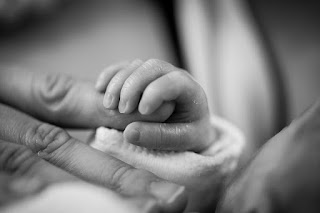
I love babies. I love the feel of their tiny hands wrapped around my finger. The smell of their hair and the smoothness of their skin. I even love the squeaky cries they make when they are merely weeks old, which grow lustier and more opinionated as weeks turn into months. I love it all. And that's one of the reasons we've chosen at this stage in our lives to only foster babies.

But.

The trouble with babies is they do not know, when you hold them in your arms, that you are not forever. They have no memory of before, only of you, day after day, giving them food when they are hungry, changing them when they are dirty. Smiling down at them every morning to lift them from their cribs. Kissing their cheeks, one side then the other. 

A baby can't understand the difference between temporary and permanent. Can't understand when you say, "Court is next week, and then someone other than me will decide your future." No child can truly understand such a thing, but a baby? A baby just watches your mouth form the words and babbles in reply, certain your words are just more of the love they have come to expect from you. 

I love the way babies grow and change so fast their first year of life. Everything is new, everything is a first. They are astounded by the simplest things and clap their hands in delight when they try applesauce for the first time. 

But the trouble with babies is they have no reason not to trust you. Many older children in foster care have been hurt before. Betrayed before. Maybe been in and out of care before. They are wary and streetwise beyond their years. But a baby has not yet learned the world is a difficult and unfair place. I love babies, but I don't love being the one to teach them that.

Whenever the time draws near that I will be sending another baby on his way to a new life, I start giving him extra kisses and praying that somehow--somehow--he won't miss me like I will miss him. That he will hardly notice when I suddenly disappear from his life. That instead of a memory of pain and loss and confusion about why I abandoned him he will have only a memory somewhere deep in his heart of a brown-haired woman glancing back at him from the driver's seat with a smile and saying, "Almost home."

There's no plan for this

Image by Amanda Randolph from Pixabay


I've always been a planner. I knew the when and where of what everyone in my family was up to even as a young child. I was meticulous with school work and schedules growing up, which helped me achieve a 4.0 GPA even while involved in numerous sports, activities, volunteering, and work.

Planning has also served me well as an adult, allowing our family to get by on one income by sticking to a planned-out budget. Keeping my day-to-day life under control enough to carve out time for my writing career. Decreasing the stress in my life by having family meals planned out a week at a time.

Yes, planning can be a useful and beneficial thing. And I used to think it was the most useful and beneficial thing.

Then I became a foster parent.

You can't plan which evening you're going to receive a late and desperate phone call from a social worker wondering if you will take a placement. You can't plan what a foster child's parents will or will not do, what the court can or can't decide. Can't plan for how it feels when you meet a new child. How it feels to love them. How it feels when they leave you.

Being a foster parent has taught me--by force, I suppose, but taught me nonetheless--about the beauty of living in the moment. Living for today. I like to plan ahead. I like being prepared. But there's something really special about holding a child close right now, today, and letting it be enough that you got to do that right now, today. Not stewing about how many more days they will be with you or who will decide what about which part of the child's case. Not trying to plan for this to happen, and then that, and then this. Just being thankful for today.

I wonder what it would be like if we could all love the people in our lives as they are right now, one day at a time. Not wishing for more or waiting for change or running around too busy and distracted by everything coming up to appreciate what we already have.

Planning ahead makes me better at a lot of things, but living for today makes me a better foster mom. It's hard, but I'm called to love each child that comes along as much as I can, while I can. I'm called to surrender my need to know what's coming. My desire for order and schedules. My carefully thought out calendar. And I'm called to trust that God will take care of all that stuff while I do the job He gave me to do.

So...I guess that's my plan.

The Purple Bowl

For me, it was a purple glass bowl I had set down on the counter. For Ellie in the movie Instant Family, it was a beautiful crystal dish she'd tucked away in the top of her cupboard. Both smashed to pieces by foster care.

Both symbols of devastation...and love.

Have you seen that movie? It's about a married couple who become foster parents to three kids. Their lives are flipped upside down as they learn to parent kids from hard places and discover what family really means. As a foster parent myself, I relate to so many of the scenes in the movie, but the one that always strikes me the most is when Ellie's dish falls from the cupboard during an incident with the children, breaking beyond repair.

I was heartbroken when it happened to me. My 2-year-old foster son was "helping" me make biscuits. I set my best mixing bowl, a glass Pyrex we'd received as a wedding gift, on the counter and turned to grab a spoon from the drawer. In a flash, he swiped at the bowl, and I turned back just in time to see it fall. I gasped. He screamed. A frantic cleanup commenced. And I continued to find tiny purple shards of glass in inexplicable places in the kitchen for weeks afterward.

It was my absolute favorite bowl. One I used almost daily. In the movie, Ellie's dish was important to her too. But then, foster care.

We've been foster parents for almost five years now, and these broken dishes have come to mean something very important to me. I have learned you can't love kids from hard places, kids who are not "yours," without being broken. Shattered. You can't be what they need without giving up your ideas of the perfect family. Your hopes for a clean house. Your time and attention. Your favorite bowl.

If you have kids, you might be thinking that all parenting is like that. And you're right. Biological children break bowls, too. But choosing to step into foster care breaks you in a way other kinds of parenting cannot, because you're giving up all those things for children who are not going to stay. Who will never be yours.

It's devastating. But isn't that also what real love is? Allowing yourself to be broken for the sake of another? Even when you know they could be whisked away tomorrow, leaving behind shards of glass that will keep piercing you long after they are gone? Real love isn't safe. But it's what kids from hard places need.

I still miss my bowl. It was just the right size. It was easy to clean. It was pretty. But I miss that little boy more. Would my purple bowl still be intact if he had never come? Would my heart? Probably so. But would I undo it if I could?

Never.

Are you afraid of being smashed to smithereens? Are there any special items in your home that you would hate to see destroyed? If so, then maybe you think foster care is not for you. But if you have room in your heart for some real love--if you believe that broken things can be beautiful--well, then, just maybe it is.

Just enough for today

He was taller. Had a different haircut. But I would've known him anywhere.

Little Man.

The first child I ever brought home from the hospital who was not born from my body. The first child to need me in a way I'd never experienced before. Our first foster son. Gone from our family almost two years now but still always in our hearts.

His aunt and uncle, now his adoptive parents, didn't have to let me know they were passing through town. Didn't have to go out of their way to stop and see us. But they did. He climbed out of the car and it was like the last two years disappeared and there was my Little Man standing at my knee. Only this time he didn't know me. Didn't know what the fuss was all about. Didn't understand why I kept taking his picture.

It was one of those moments you can never really prepare for. All we'd ever wanted, all we'd ever prayed for, was that he would someday have a loving family and be happy and whole. And there he was, loved and happy and whole, and all I could do was stare and thank God. I didn't know what to say, but Little Man smiled at me and I thought, "He's okay. After everything he's been through, he's okay."

Our new foster son, Baby Shark, was there too, wearing a shirt Little Man used to wear and sitting in a stroller Little Man used to ride. Little Man played peek-a-boo with him, laughing, and said, "Baby." Then he looked at me, the wheels in his brain turning, turning, trying to figure out why I seemed so familiar...why I felt like family...and said, "Grandma?"

I never imagined I'd be a grandma in my 30s, but it felt right. It sounded beautiful.

When our visit with Little Man and his family ended, we all said goodbye. It wasn't nearly as hard to do this time, knowing he was exactly where he needed to be. But as I drove away, listening to Baby Shark babble in the car seat behind me, my heart squeezed. I need to give him more kisses, I thought. I need to give him more snuggles. More, more. But will it be enough? Any month, any week, any day now, he will be gone, just like Little Man. He will leave and there will be no guarantee we will ever have the chance to see him again.

Baby Shark was ready for his nap when we got home and I closed the blinds in his room, turned on his fan, and held him for a minute, a little tighter than usual. Little Man's story had turned out better than I could've hoped, but what about Baby Shark? Would he too have a loving family and be happy and whole someday?

Yes.

My breath caught. Yes. Because he has a loving family and is happy and whole right now. Today. I don't know about tomorrow, but today?

"I love you," I whispered.

I don't know how long he will be here or what will happen to him. I don't know if he'll eventually go on with his life with nothing but a vague memory of some lady who smiled at him and gave him kisses. But because of Little Man, because of the gift of seeing him again, I know that what I have to give Baby Shark, all I have to give, is just enough for today.

A very fine line

When you're a foster parent, one of the easiest things to start believing is that you're "better." A better parent, a better provider. Better at meeting a child's needs. Better at communicating and keeping track of schedules. An overall better citizen of the world.

And of course it must be true, right? Because why would anyone take a child away from his parents and give him to you if you weren't "better?"

Foster parents and bio parents don't typically have much interaction. Visits with the child and other meetings are often set up specifically to avoid interaction, in fact, and this is a good policy most of the time. The current pandemic, however, has replaced in-person child visits with virtual visits and brought foster parents like me face-to-face with the people I'm tempted to believe I'm just so much better than.

Our current foster placement is only a few months old. He can't talk or hold a phone, much less facilitate a Skype call. So when he "visits" with his parents, I am there. When they talk to him and read him books and tell him how big he's getting, I am there. Not on the screen, but behind the camera, holding the tablet up so he can see and listening to his parents say they miss him so much. They want to hold him so much. They love him so much.

As I've helped my foster kiddo participate in these "visits" twice a week every week, I've grown increasingly uneasy. Those people on the other end of the call--whose faces fill the screen with smiles for their son--well, they're so...human. Just like me. Not monsters. Not psychopaths. Not imposters.

Parents. Like me.

Over the last few weeks, God has shown me that the line between where I sit behind the camera with custody of a child not my own and where others sit on a Skype screen wishing they could hold their son again is a fine line. A very fine line. And if not for the grace of God it could've been me on the other side. Could've been me laying awake at night wondering how many days it will be until I see my child again.

I can hear you thinking it: The state didn't take their son away for no reason. They must've done something bad. Something irresponsible.

You're right. They did. But their poor choices did not take away their humanity and make them somehow less than me. Just as there's a fine line between my side of the camera and theirs, there's also a fine line between thinking I've made better choices than them and thinking I am better.

If there's one thing the last couple months has proven, it's that things can change really fast. Life can be upended. People can suddenly find themselves in situations they never would've thought possible. When I hold this sweet little foster kiddo in my lap, I think about the fine line between me and his parents. The fine line between any of us and a whole different life. And I'm thankful to be where I am. In a better place than some...yes. But not better.

Too involved

This is what a woman said to me recently when she learned I was a foster mother: "I couldn't do it." She took one look at the baby in my arms - a baby who isn't mine but needs me desperately - and shuddered. "My heart would get too involved."

I thought about her words for a long time afterward. They're still running through my mind, actually. Is my heart not involved enough? Is that why I keep saying yes when the state calls me about taking in another child? Is that why the foster care life has not yet broken me? Because I've been able to keep my heart out of it?

My heart would get too involved. The more I think about it, the more I think that woman was on to something. She instinctively knew that if she got involved with a foster child her heart would also, and her heart shied away from that potential pain like a hand being jerked back from a hot stove. A warning rang out in her head: Danger. Danger. Heartache ahead. Don't get involved.

So what does that mean for me? As I write this, I'm snuggling a two-month-old baby whom I've only known a few weeks but already love. But when the woman I talked to made those comments, she implied (unintentionally) that my heart is not that involved. She implied that is the reason I am able to love a baby I know will leave me.

The truth is my heart is way too involved. Too involved to heed the warning of danger. Too involved to protect itself at the expense of a vulnerable child.

I don't mind what this woman said because her statement was honest and a hundred percent true. If she were to foster a child, her heart would get too involved. That's how it works. I can't dispute that. But I can challenge the idea that an involved heart is to be avoided at all costs. Because what in our lives is worthwhile without our hearts being involved?

I can also challenge the idea that you have to be the one to actually take a child into your home for your heart to be involved. There are many other ways. In just the past couple weeks, I have had a friend give a generous amount of money for my foster baby's needs, another friend babysit him on short notice, multiple people volunteer to drive him to one of his many appointments so I could stay home with my other kids, and a whole team of people set up a free dinner for foster families. Other people have purchased items like backpacks for kids in foster care, sewn blankets, and donated formula.

It reminds me of what Jesus said in Matthew 25: "Whatever you did for one of the least of these brothers and sisters of mine, you did for me." If you read the verses before that, you will see he was referring to clothing and feeding and sheltering people. To visiting them in their distress, caring for them in their sickness, and welcoming them in. It's hard to do those things without getting your heart involved.

But what about the danger? The wailing alarm screaming "Heartache ahead!"? Well, that's a good question. A valid question. But I don't have much time to worry about the sacrifices required to foster, the unavoidable pain, the helplessness and frustration. I just don't have time. My heart's too involved in the task at hand. And I'd rather my heart be too involved than not involved at all.

Foster care math

He arrived on a Thursday evening, covered in sweat. He wore a shirt and jacket that were too small and a pair of shorts despite the freezing temperatures. He carried a blue and black blanket that reeked of...something. And that was all he had.

One outfit plus one blanket equals the sum total of his earthly possessions.

I peeled the sweaty clothes from his back and coaxed him into the tub with a yellow ball and bubbles. He did not speak or cry but only whimpered. I spoke quietly to him as I washed him, wincing at the abuse the scars on his body revealed - the story I could easily read in the size and shape of the marks. I pulled his two-year-old self out of the tub and wrapped him in a towel.

"Mommy?" he said.

Sometimes I wish my door did not open for vulnerable and broken children. That I could turn the lock and go about my life unaware of the need on the other side. But that is not my reality. Even with the door shut tight, I can hear those kids out there, crying for help. I can sense their presence. And I can't turn them away.

A phone call from CPS plus an empty bed plus a willing heart equals an open door.

He handed me the same three toys over and over until he grew tired and a wild look appeared in his eyes. I laid him down in our extra bed as his whimpering returned and assured him he was okay. Everything was okay. It was going to be okay.

"Mommy?" he said.

"No. Auntie. I'm Auntie."

"Night night," he said.

I stayed awake worrying. His placement with us was meant to be very short-term...so where would he go from here? Would he be safe? What was he used to doing? Eating? Did he have any allergies? Diseases? I had no way of answering any of those questions and there was no one who could, not even the case worker.

Too many questions plus not enough answers equals a terrible night's sleep.

Over the next few days, I did my best to make him feel at home. To give him as many hugs and kisses as he would let me, which wasn't nearly enough. I kept him clean and safe and fed and had him looked over by the doctor. I threw away his only possessions once I learned they'd come from a drug lab and replaced them with new clothes that actually fit and a new blanket and a giant stuffed dog he refused to put down.

Two weeks dragged - and flew - by and then he was gone. Moved to a different situation deemed by the state to be best for him. And I prayed God would watch over him wherever he went, but I also breathed a sigh of relief because my anxious hyper-vigilance was no longer required 24/7 and a hundred questions from every person I ran into no longer needed to be answered or avoided and no more poopy diapers needed to be changed. Phew. Life returned to normal.

But I could still hear him say, "Mommy?"

So I stocked up on diapers and wipes and am getting as much sleep as I can so next time I'll be ready to do it again. Because the sum total of a vulnerable child's possessions plus an open door plus a terrible night's sleep multiplied by the love God puts in my heart just for these kids equals a difficult and meaningful calling.

That's foster care math.

Dangerous dreams

It's a risky thing to have a dream. Having a dream means leaving the relative safety of the sidewalk and stepping onto the unpredictable road of the unknown. I believe it was Erin Hanson who wrote these words you'll see all over Pinterest: "What if I fall? Oh, but my darling, what if you fly?" Flying is awesome. Flying is definitely the desired result if you take a leap of faith. But...what if you don't fly?

Splat.

It's risky.

There's another inspirational saying from Pinterest that goes: "Shoot for the moon. Even if you miss, you'll still land among the stars." I used to love that saying. Yes, I thought. Dream big. Don't be afraid to fail. Shoot for the moon. I loved it.

Until now. Now one of the most ambitious goals of my life is actually within reach and I'm soaring above the clouds and dreaming big dreams...and the pavement looks awfully unforgiving from up here. Suddenly the stars feel less like a sparkly "almost made it" and more like the black abyss of space. Land among the stars? You mean where I'll die a horrible death and be swallowed up by the void?

Gulp. Thanks for nothing, Pinterest.

But dreams, no matter how dangerous, don't just go away. I've dreamed about and worked toward publishing a novel for many, many years, and recently I sold one of my books to Bethany House (a major Christian book publisher), and they plan to release it October 2020. A real book of mine. On the actual shelves of Barnes and Noble. On the bedside table of people all around the country.

But it's risky.

What if no one likes it? What if no one buys it? What if it's a huge flop and no other publisher will ever consider working with me again? What if my story offends someone? What if it puts everyone to sleep?

What if all the time and heart and sweat and tears and financial investment I've put into this comes to nothing? 'Tis dangerous to dream, indeed.

No, the wisdom of Pinterest doesn't give me much comfort when I consider my dreams now. But the Bible has this verse that says, "Commit to the Lord whatever you do, and your plans will succeed." That's Proverbs 16:3. And that's something I can hold on to when I consider my dreams. This verse doesn't promise my book will be a best seller. Or that it will even sell a single copy. But it does promise that if I place my dream in the Lord's hands, to do whatever He wants with it, the outcome can be considered a success. Yes, even failure can be success when God uses it for His greater purpose.

It's still risky. I could still face-plant on the pavement. But I can trust that God will have a reason for that.

So here's to chasing big dreams in faith, and here's to everyone out there willing to risk the vast nothingness of space for just one shot at that moon. Just remember God's got this.

After all, He made the moon.

Top 3 Questions People Ask About Foster Care And Adoption

When people find out we have adopted or that we are foster parents, they always ask questions. Some of them are wildly inappropriate. Some of them are hurtful (as a friend said to me recently, "To be involved in orphan-care ministry is to be misunderstood."). But for the most part people have genuine and sincere questions that I really do want to answer.

Here are the top three:

1) How much does it cost?

Everything always comes down to money, doesn't it? But it takes so much more than money. It costs everything you have and everything you are. You can hold nothing back.

So the short answer to the question is "everything." The long answer is "it depends."

If you pursue foster care, the training is free, the state provides healthcare for the child, and you get a monthly reimbursement check to cover room and board for the child. But while the monetary commitment is minimal, the time commitment is enormous. You will be up at night comforting scared children. You will be spending hours on the road taking them to appointments and visits. You will sacrifice your comfort zone and your need for control and your personal space.

If you pursue adoption (outside of foster care), the monetary cost is often very high. It is not unusual for costs to reach $30-40,000. Most people do not have that kind of money sitting around. We sure didn't when we adopted. But did you know there are no-interest loans available for adoptive families? Grants and matching grants? Employee adoption benefits? Hundreds of fundraisers tailored to adoptive families? I'm told it's not good manners to talk about personal finances, but I'm going to do it anyway: when we adopted our daughter we received $16,000 in grant money and about $10,000 from fundraising efforts. We never could've afforded it otherwise.

So, how much does it cost? It depends. But you can be sure even when the state picks up the tab, there is still a price to pay.

2) How do I know if I'm ready?

People ask me this all the time and I still haven't figured out a better answer than "You don't." You didn't know if you were ready when you first started driving, when you got your first job, when you got married, when you had a baby, when you started a new job, when you bought a house. But you hoped you were. You did everything you could to be ready and then you held your breath, said a prayer, and dove on in.

If you're waiting for someone to come along with a magic wand and sprinkle Readiness dust on your forehead, it's never going to happen.

3) How can I be involved?/How can I help?/What can I do?

This question comes in many variations but the answer is always the same: be available. It's that simple and that complex.

If all your resources are maxed out on personal pursuits, you will have nothing left to give vulnerable children or families and organizations trying to help vulnerable children. And I'm not really talking primarily about money here (although you wouldn't believe the amount of joy a $25 gift card to Dairy Queen can bring an emotionally exhausted foster family). I'm talking about your time. Your love. Your thoughtfulness. Are you available? Or are all the days of your week already filled with all the many wonderful things you and your family want to be part of?

There's nothing wrong with those things. But if there's no breathing room in your life, no extra, what do you have to give? How will you be ready if an opportunity to help comes along? What happens if you become aware of a need you would love to help with, if only you had...more...time?

I'm not saying to give up gymnastics or art lessons or family bowling night or whatever. But for every yes, there has to be a corresponding no. So if you really want to help vulnerable kids, build some margin into your life. Choose your "yeses" and "nos" carefully. Be available.


So, what other questions do you have? What is the one thing you wish you knew about foster care or adoption but have always been too afraid to ask? Drop your question in the comments and click on this link to go to my website and download the Road to Adoption Guide, which answers the fourth most common question: Where do I start?

Plans change

It's been nine and a half months since Little Man left. Nine and a half months of my heart dropping into my stomach every time I see a little blond-haired boy. Nine and a half months of missing his belly laugh and wondering how he is doing. I can still feel his arms around my neck. I don't know if I'll ever not miss him.

But time marches on. We fostered another little boy for a few weeks, and then after he left we didn't get any calls from the state. Weeks went by. Months. No calls. My arms started to feel a little empty. I thought if the state called looking for a placement for another baby...well, I kind of hoped they would. I was ready.

Then it happened. A newborn was in the hospital and needed a safe home. Would we take him? Were we willing?

My heart was immediately invested. Yes! Yes, we would take him! But...we were on vacation. Can he stay with another family until we get back in a few days?

The case worker said yes. We told our kids they could expect a new baby when we returned home. My mind raced with plans. I'd have to get the bottles back out...set up the crib...see what size diapers I had under the bed...I couldn't wait to meet him. My heart was full to bursting. Then, plans changed.

Instead of moving the baby from home to home, the case worker decided it was best for him to stay where he was, with the family who had agreed to take him while we were gone.

He would not be coming to our house.

I would not be setting up the crib.

Why are we doing this? I wondered. Why did we sign up for this roller coaster ride? I prayed and asked God why this was happening but couldn't hear an answer over the roar of disappointment in my ears.

Three days after we got back, we got another call. No, not from the state. Not to foster. Instead, a nonprofit orphan-care ministry in Bozeman was bringing five kids from the Philippines to stay with five host families here for a month to meet other families who might be interested in adopting them. Five older kids who are running out of time to find a forever family. The program is called Summer of Hope. The kids were coming in a few days. But...one of the host families had to drop out. They needed another one ASAP. One that had a current home study and a foster care license and no placements. Would we do it? Were we willing?

It wasn't what I had planned. I could still practically feel the weight of a newborn in my arms, and now they wanted me to take a 10-year-old girl from the Philippines? My heart did this sort of gasping thing that feels like it's turning inside out. This was not what I had planned. This was not what I had planned!!!

But.

A child needed me. Needed our home. Needed a hand to reach out and span the distance between spending the rest of her life in an orphanage and finding a forever family. Yes. Yes, we would do it. No, it wasn't what I had wanted. What I had planned. But yes, we would host this girl. And when she comes, we will advocate for her, be her champions, so this can truly be a Summer of Hope for her.

You know, sometimes plans change. I don't know what God is up to. Why He worked this out the way He did. But I know that no matter how hard it is, how much it hurts sometimes, having a willing heart and an open home is a great position to be in.

You never know what might happen when plans change.


Photo by averie woodard on Unsplash

The Camp-Out From Hell

(In honor of our upcoming vacation, I thought we'd revisit the 2017 Camp-out From Hell. You can't make this stuff up.)

It started with a "Daddy, I don't feel good" before we even got to camp. (And by camp I mean the KOA in Great Falls, which I know doesn't even qualify as camping to some of you, but we needed an easy place to meet up with my family and this was it.) Andy pulled over JUST in time for Simon to fling himself from the car and puke in the gravel on the side of the road.

It was all downhill from there.

We pulled into Site #6 at the KOA and stepped out onto a way-smaller-than-it-looked-in-the-pictures grassy area covered in dog poop. Right where our tent was supposed to go. You know what else was waiting for us where our tent was supposed to go? A yellow-jacket nest. Before I could even get the dog poop cleaned up, the horrible, vindictive buzzing creatures had zeroed in on the most vulnerable among us: poor Simon.

While Simon wailed in pain over two stings to the neck, I frantically tried to find some ice or something to give him. Why hadn’t I packed Benadryl cream? I’m a horrible mother. Then, another scream pierced the air. My sister-in-law limped over from neighboring Site #7 bleeding from her foot. She had stepped on - of all things - a tiny American flag pin laying on the ground pointy side up.

We’d been in camp less than 20 minutes.

The first night was miserable. Every hour the sound of my brother’s air pump whirred through camp as he re-pumped his air mattress, because it, too, had been punctured by the American flag. (This is the price of freedom, people.) Then, every time one of the kids had to get up to go to the bathroom…guess what? They couldn't get into the stupid building because the code on the door wouldn’t work. Not to mention that the man in Site #5 snored so loud we thought there was a landslide, and the drip hoses strewn willy-nilly all over the ground squealed like incoming missiles in the quiet of night. Needless to say, no one got much sleep.

So we were all exhausted the next day. But we were together, and that’s what camping is all about, right? Spending time as a family away from TV and cooking implements and clean sheets.

We spent most of the day at the Electric City Water Park in Great Falls and returned to camp with high hopes of having a better night. After all, we figured out how to shut off the squealing hoses, we stuck a rock in the bathroom door so no one would have to pee their pants, and my brother patched the hole in his air mattress. Things were looking up.

Then, in the wee hours of the morning, what was this? What are these strange sounds? Is the KOA being invaded by hostiles? Nope. A church group had come bright and early to set up a day camp in the field next to our sites, of course. Because the only logical place to hold a Bible camp is in the middle of a KOA while people are sleeping.

Did I mention the automatic paper towel dispensers in the bathrooms did not, in fact, automatically dispense? And that there was an overweight squirrel casing our supplies every time we turned around?

Anyway, our third day at camp was very strange. Everywhere we turned, there were little kids in matching neon green shirts doing crafts and singing about The Golden Rule. The hot tub at the KOA splash park was about as warm as the Gallatin River. And we caught probably a hundred yellow-jackets in the traps we set up.

But that wasn't the weirdest part. The weirdest part was that so many helicopters were flying back and forth directly overhead that we went to the KOA office to use their Wi-Fi so we could check and see if we had gone to war with North Korea. I am not joking. We thought World War III had started and we had missed it. We were relived to discover there was an Air Base nearby practicing maneuvers. Then we discovered someone from a neighboring site was working against us to keep those wretched bathroom doors closed. We didn't know who it was, but every time we stuck a rock in the door, they would come along and kick it out.

A mystery was definitely afoot.

And we had two more nights to go.

(click here for Part 2)

Life Before: Things I Never Knew Before Becoming A Foster Parent

Before I was a foster parent, I never checked the online roster for our county jail to see who had been booked the night before. I never even knew you could do that. And I had certainly never received a phone call from an inmate there. But that was life before.

Before I was a foster parent, I had no idea what acronyms like TPR, FEM, or CASA* meant. No idea that a bio parent only had to be clean for a couple of months for reunification to be considered. Or that court proceedings regarding the life and future of a child I had raised as my own could happen without me being told about it until after. But that was life before.

Life before passed by without obsession over missed phone calls that could be from a social worker asking if I would take a placement. It passed without standing in the diaper aisle at Wal-Mart trying to remember if there were any sizes I didn't have stashed under my bed at home...just in case. And maybe I'll pick up these fleece sleepers on clearance while I'm at it because at any moment a baby might come to my home with nothing but the clothes on his back.

Life before did not include terms like "trauma-informed" or "attachment disorders." Life before was unaware there was a patch you could wear on your skin to monitor your drug use or that a follicle hair test could trace your drug use up to three months back. My life before did not see the vicious cycle people can be stuck in when they lose their driver's license but can't get a job without it but can't pay off their fines to get their license back without a job. Or the cycle of trying to get off meth by taking doctor-prescribed pills and then losing access to the pills and ending up back on meth to cope with withdrawals from the pills. None of that had touched my world...before.

Before I was a foster parent, my kids didn't know there were children out there being removed from their homes who would have nowhere to go if not for foster families. They had no idea babies could be abandoned while their parents dug through dumpsters looking for food, or that a traffic stop could result in an arrest that left a child sitting alone at a police station waiting for a social worker to pick her up and take her to a stranger's house.

But now they know. We know. And our world is bigger for it because it has to be.

Life before was less complicated. More sheltered. Easier. There was a lot I didn't know. And life before did not require me to open my heart to children and families who would break it to pieces.

That was before. But now? Now I'll only look ahead, because I can never go back to life before.


*Terminate Parental Rights, Family Engagement Meeting, Court Appointed Special Advocate

Invisible, part 2

I didn't think I'd ever write a sequel to my original post about the invisible challenges children and parents face when a child struggles with something people can't "see" from the outside, but I've found myself thinking a lot about this subject again lately. Maybe because of Easter. A lot of invisible challenges are exacerbated by the holidays because of over-stimulation, change in diet, and lack of routine.

Or maybe it's just on my mind because I live with it every day. I don't know.

Anyway, I've noticed there seems to be a hierarchy regarding which invisible special needs are given accommodation and which aren't. The ones given consideration are typically the ones that are more tangible and/or easy to understand. Let's use a peanut allergy as an example. This is an invisible challenge (you can't see if from the outside), but just about anyone can understand it: You eat peanuts, you get sick. Don't eat peanuts.

People living with this challenge know it's not nearly that simple of course, but for the most part people who don't have a peanut allergy can still understand the problem and make accommodations. Here's a Kit-Kat bar instead of a Reese's. Here's a ham sandwich instead of PB&J.

But people are less willing to accommodate special needs they don't understand. RAD? APD? ELD? What do those letters mean? Trauma-informed parenting? What's that? Why can't your kid just do what all the other kids are doing? They don't look like there's anything "wrong" with them. They don't look like they have any "problems." And that trauma they experienced happened years ago, why is it still an issue?

Because the brain is a tricky thing, that's why. But that's not the point. The point is, invisible challenges should never be dismissed as imaginary just because they're hard to see and hard to understand.

Invisible friends are imaginary. Invisible special needs are not.

So if your child has an invisible challenge, I want you to know I see you. I see your child. Their struggle, and yours, isn't any less real just because others refuse to acknowledge or accommodate it. It isn't any less real just because it's invisible to most people.

But most importantly, God sees you. Nothing you do for your child goes unnoticed by your Creator. When you are snubbed by friends who don't understand your parenting, He is there. When you have to miss an event or activity because of your child's special needs, He stays behind with you so you are not alone. You are not invisible to Him. Your child's needs are not invisible to Him. Even if you're angry at Him for the situation you find yourself in, even if you blame Him...even if you don't think He exists...He sees you.

"The Lord does not look at the things people look at. People look at the outward appearance, but the Lord looks at the heart." -1 Samuel 16:7b

One night at a time

You're trudging through your day--doing laundry, packing lunches, taking meat out to thaw for dinner--dreaming about putting the kids to bed early and eating ice cream straight from the carton. You're tired. You've been watching your days slip away so fast that months go by in a flash. Maybe you're frustrated about something going on in your life. Maybe you're overwhelmed. But you put one foot in front of the other and soldier on.

Then the phone rings. Do you have room for another baby, CPS wonders. Or a set of siblings. Or a teenager. Well, do you? Can you take them?

Your heart constricts, the unforgiving fingers of all your responsibilities squeezing it tight. Your life is already full as it is. You already have three kids. Their parents were sent to jail, CPS says. Or rehab. Or worse. Please can you take them?

Everyone always says, "I could never do that." "I would get too attached." You know exactly what they mean. You can't do it. You do get too attached. And there go your chances of eating ice cream in peace, because you tell CPS yes.

A bag of clothes that smells like cigarettes sits on the floor of your house while you set up a crib or put sheets on a bed. A child watches, afraid. The CPS worker is long gone. You offer a snack or a smile or a hug. You wonder what you've gotten yourself into. But the day goes by, as days do, and all things seem possible in the light of day. You will love this child, you say. Your family will pitch in and make sacrifices. Everything will be fine.

Then night falls. The two-year-old who hasn't spoken a word starts screaming "Baby! Baby!" and reaching for his little sister when you try to put him to bed. He's never once asked for his mom or dad. But he refuses to be separated from his "baby." Or the seven-year-old huddles under her sheets, rocking back and forth for hours until she eventually wets the bed. Or the fifteen-year-old sneaks a knife from the kitchen to keep under his pillow, terrified of who might come for him while everyone else is asleep.

You want to lay down and rest, but you can't. Every muscle is poised to jump up and run to this new child in your home in case they need you. Your ears are strained to hear the slightest sound that tells you something is wrong. You stare into the darkness, praying to God and re-playing the question you've been asked a hundred times: "How do you do it?" You don't know. You add more questions: "How did I get myself into this?" "What if something terrible happens?" You begin to wonder if there are any answers. The darkness presses in.

Then something amazing occurs.

Something beautiful...and full of grace.

Morning comes.

You see your new child's consumption of a few bites of eggs as a victory. You learn their middle name or their favorite color. You coax from them the smallest of smiles. You adjust. And all those questions kind of fade into the background as you find yourself once again trudging through your day--doing laundry, packing lunches, taking meat out to thaw for dinner--dreaming about putting the kids to bed early and eating ice cream straight from the carton. And you put one foot in front of the other and soldier on.

And that's how you do it.

One night at a time.